Blogs
July 28, 2026

Thomas Alflen
Oddity.ai
AI-powered incident detection helps care organizations surface relevant moments sooner, strengthen situational awareness across busy environments, and preserve human judgment where it matters most.
Every day, care facilities balance two competing priorities: delivering compassionate care while maintaining awareness across busy environments. Staff cannot continuously monitor every hallway, common area, or camera feed.
AI-powered incident detection helps organizations identify situations that may require attention sooner, giving teams additional awareness while preserving human judgment.
Care environments are dynamic. Multiple activities happen simultaneously, and staff naturally prioritize direct care over watching camera feeds.
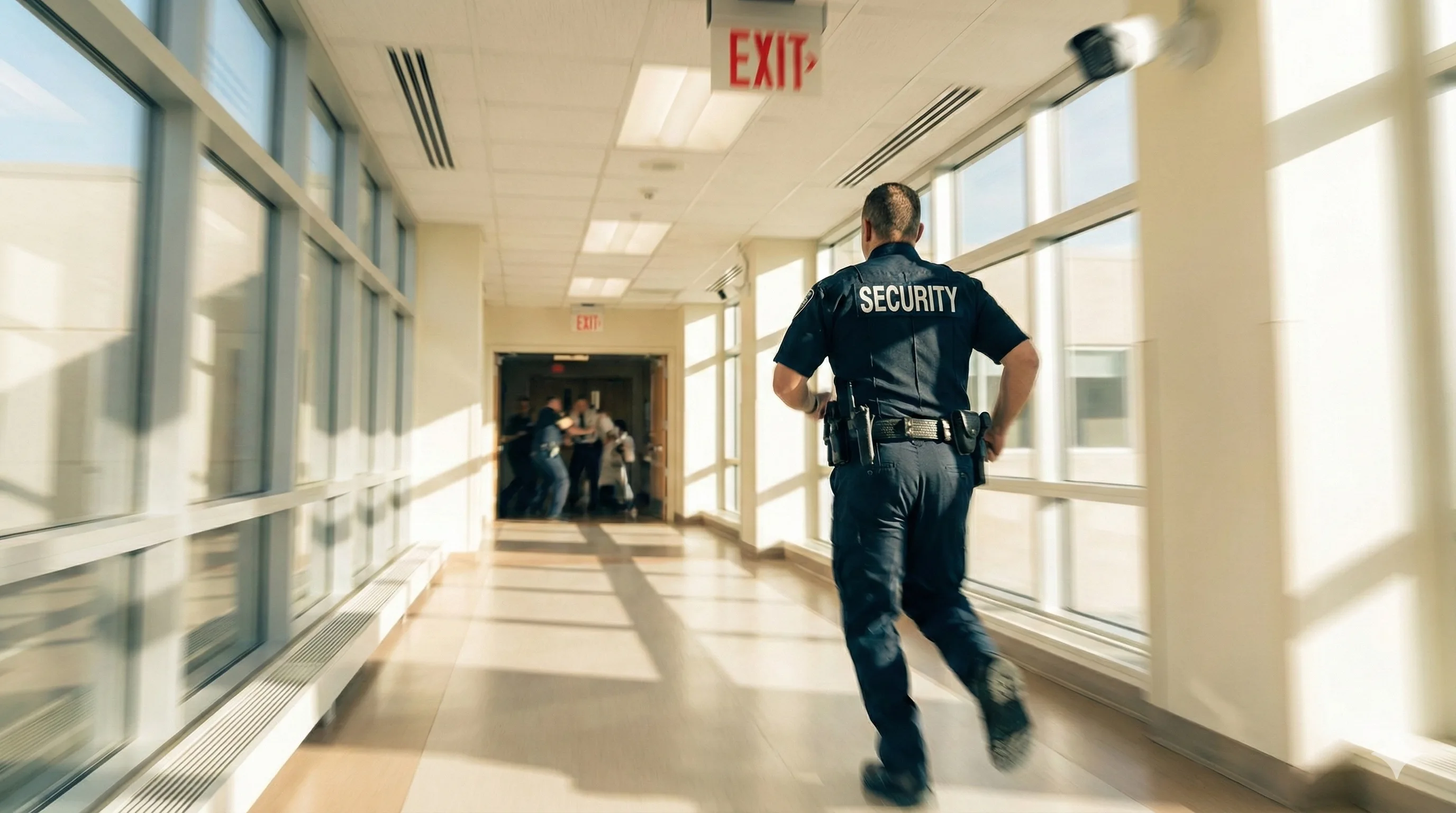
As a result, relevant situations may develop before the appropriate team becomes aware of them. In many environments, incidents involving aggressive behavior or situations where staff are physically attacked or abused may take minutes to be noticed, or they may not be detected at all if no one is actively monitoring the right screen.
This is where AI-powered incident detection can strengthen operational visibility. Rather than replacing people or procedures, it helps identify situations that may require assessment, allowing staff to respond based on their professional judgment.
One of the practical advantages of Oddity.ai is detection in less than 0.5 seconds. That speed does not resolve a situation on its own, but it can significantly reduce the time between an event beginning and the appropriate staff member receiving a timely notification.
When an alert is generated, staff still evaluate the situation, determine the appropriate response, and follow existing organizational procedures. The technology simply helps ensure that important moments are less likely to go unnoticed.
For leadership teams focused on care facility safety, this means greater incident visibility across monitored environments without changing the role of trained professionals.
AI-powered incident detection does not replace traditional camera systems or professional oversight. Instead, it adds an automated layer of awareness that helps relevant situations reach staff sooner.
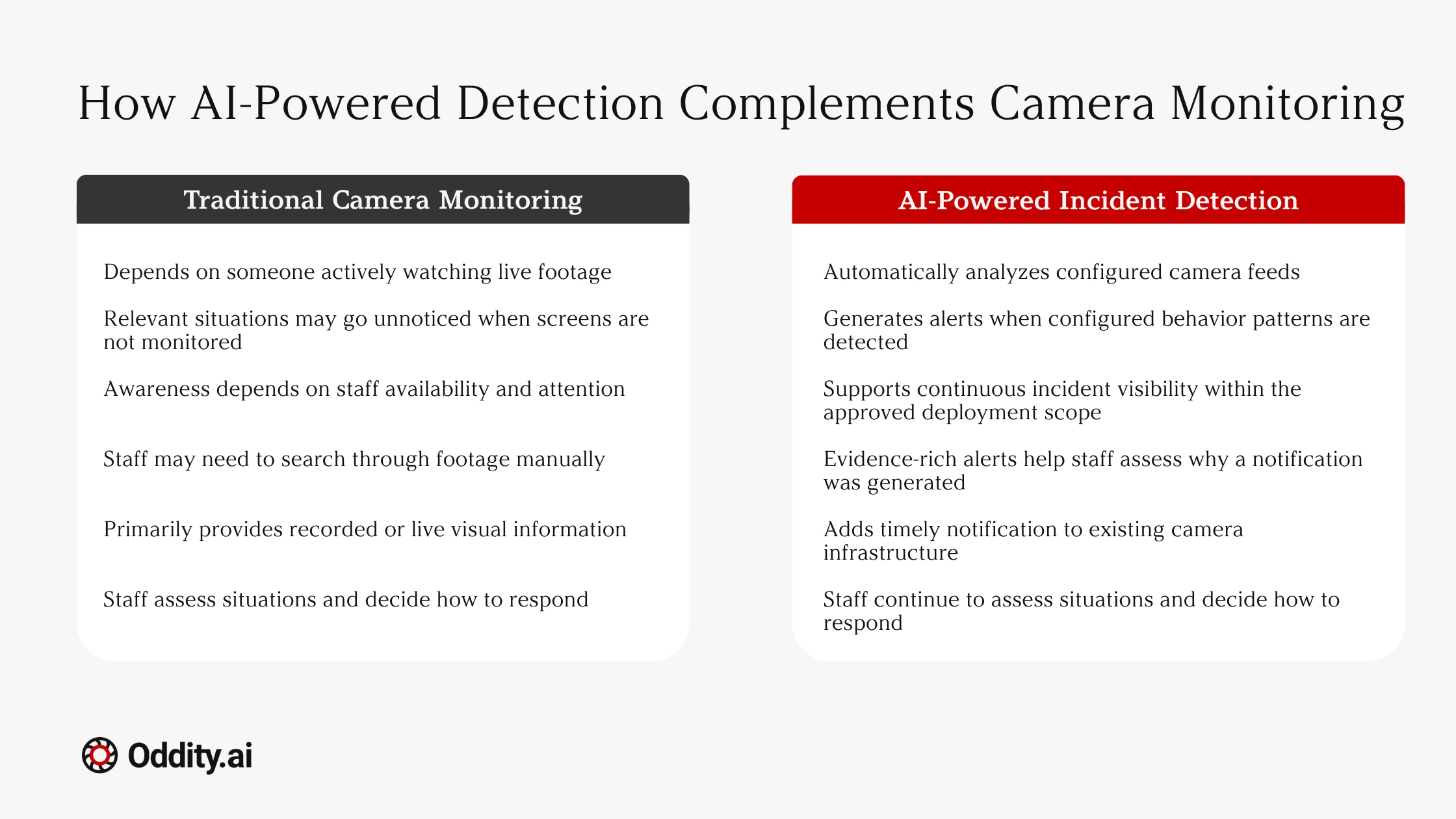
Even experienced staff cannot be everywhere at once. Camera systems may already be in place, but they often depend on someone actively watching live footage.
Oddity.ai is designed to provide more than 80% detection coverage of incidents involving aggressive behavior or physical abuse within the approved deployment scope. Coverage depends on the environment, camera placement, and system configuration, but the objective is consistent operational oversight rather than constant observation of individuals.
For organizations adopting AI in care facilities, broader coverage gives leaders greater confidence that relevant incidents are more likely to be identified promptly. Staff remain responsible for assessing what is happening and deciding how to respond.
Leadership teams increasingly evaluate technology not only on capability but also on trust. Sensitive care environments require solutions that protect personal information while supporting safe operations.
Oddity.ai uses encrypted data and HIPAA-compliant AI practices to help organizations protect sensitive information throughout the detection process. These safeguards support responsible procurement and align with the expectations of organizations managing confidential care environments.
For nontechnical decision-makers, the takeaway is straightforward. Privacy-first AI should strengthen operational visibility without compromising the protection of sensitive information or organizational trust.
Technology is most valuable when it supports the people delivering care every day.
Oddity.ai is designed to support both staff and recipients of services by identifying situations that may require attention. The system does not label individuals, make disciplinary decisions, or replace professional judgment.
Instead, it provides evidence-rich alerts that improve incident visibility and help teams quickly understand why an alert was generated and assess the situation using established procedures.
This human-centered approach reinforces existing workflows and improves response readiness, while keeping experienced professionals responsible for assessment and action.
During an afternoon recreation period, two recipients of services begin arguing in a shared common area. As their movements become more aggressive, nearby staff are assisting another resident in a different wing.
Within seconds, the system generates an alert, allowing staff to assess the situation before it escalates further. The technology provides timely notification, while people remain responsible for every decision and action.
For leadership teams, the value of AI-powered detection is not about replacing human expertise. It is about improving visibility across monitored environments, helping staff identify relevant situations sooner, protecting sensitive information through responsible technology, and supporting safer care environments for everyone.
By combining rapid detection, broad monitoring coverage, privacy-first infrastructure, and a human-centered approach, Oddity.ai provides an additional operational layer that complements existing safety processes rather than changing them.
No. Oddity.ai supports existing procedures by helping staff become aware of relevant situations more quickly. Staff remain responsible for assessment, decision-making, and every response.
The platform operates through secure private-cloud infrastructure, uses encrypted data, and is designed with HIPAA-compliant AI practices to help protect sensitive information in care environments.
Organizations should assess how the technology fits within their existing safety procedures, deployment scope, privacy requirements, operational workflows, and organizational goals. Successful adoption focuses on supporting people rather than replacing professional judgment.
Every care environment has unique operational needs. If you're evaluating AI-powered incident detection, see how Oddity.ai can support faster situational awareness while fitting into your existing safety processes.
Request a personalized demonstration to explore how the platform could work in your environment.
Request a personalized demo