Blogs
January 28, 2026

Thomas Alflen
Oddity.ai
In human services, safety is not about systems alone. It is about people, often in vulnerable and deeply human moments, who rely on consistent and compassionate support.
Recipients of services may experience heightened stress, sensory overload or difficulty communicating needs, which can surface in ways that require careful and timely response.
Staff are trained professionals, skilled in de-escalation, observation and positive behavioral supports. Still, no team can see everything at once. Human services organizations operate across distributed environments such as group homes, day programs, hallways and shared spaces. Even with strong staffing models, visibility is fragmented by design.
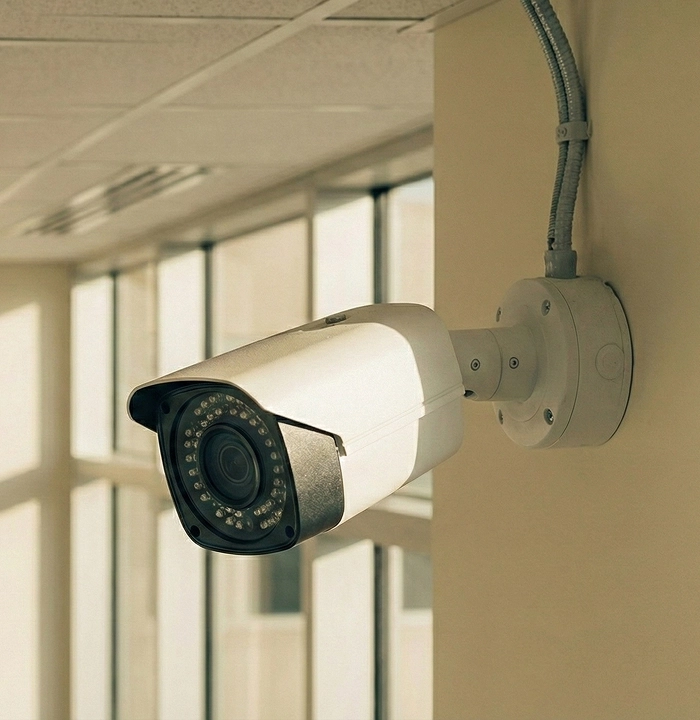
Cameras can help provide context, but they are rarely monitored continuously. When something concerning occurs, it is often discovered later, sometimes much later. Those delays matter. Uncertainty grows, stress increases and decisions are made without full clarity.
This is the context in which The NEEDS Center decided to act.
The NEEDS Center already had cameras deployed across its programs. Like many organizations, they relied on footage to review incidents once they were reported. In practice, that meant staff and administrators often reviewed video later.
When unexplained injuries appeared, investigations were triggered. During those investigations, staff were sometimes suspended as a precaution. While intended to protect everyone involved, suspensions created real strain. Staffing levels were already tight and replacing experienced staff, sometimes for months while external investigations unfolded, was not always feasible.
As leadership explained, “Cameras alone aren’t a deterrent.” What was missing was awareness in the moment, the ability to know something had happened and respond while context was still fresh.
Another concern was fairness. Without timely and objective information, investigations relied heavily on delayed recollection. That uncertainty affected staff morale, operational stability and family trust.
When The NEEDS Center evaluated options, their goals were clear. They needed to move from hearsay to evidence and from delayed review to same-day action when appropriate. Awareness had to be timely, objective and supportive, not punitive.
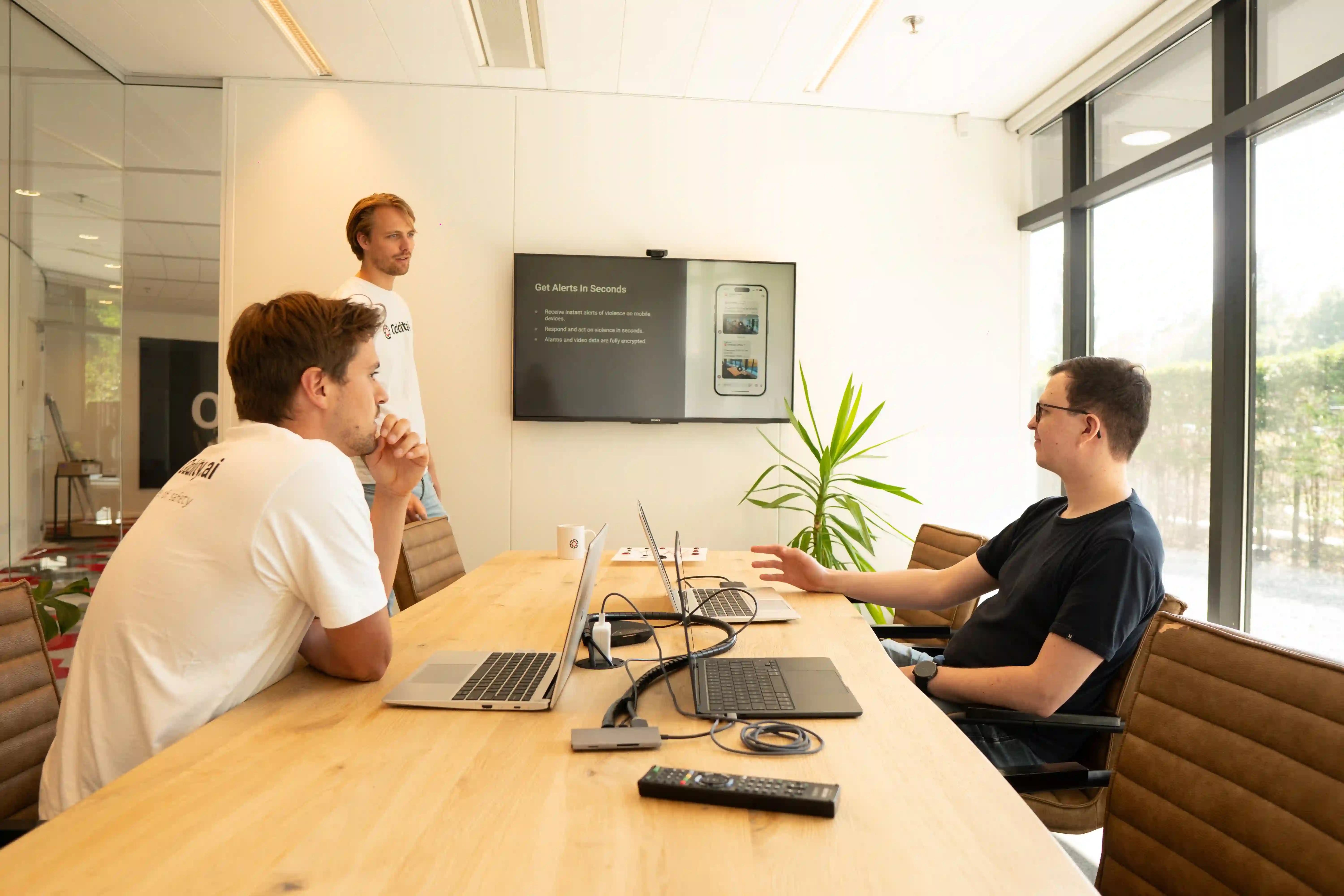
Oddity.ai analyzes existing camera feeds and provides real-time alerts for aggressive behavior and self-injurious behavior, allowing designated staff to be notified within seconds. For The NEEDS Center, this meant that cameras could become an active support tool rather than a passive archive.
Just as important, the technology needed to protect staff as well as recipients of services. Timely video context could help clarify what actually occurred, reducing unnecessary suspensions and the cascading staffing challenges that followed.
As one leader put it plainly, “If you suspend people during an investigation, you might not even have the staff to replace them.”
From an operational standpoint, deployment was intentionally lightweight. Oddity connected to the existing camera environment via RTSP and the organization’s secure VPN. No new on-prem hardware was required and the IT rollout focused on validation rather than replacement.
The initial phase surfaced a common reality with real-time systems. Alert volume needed tuning. Early alerts were intentionally sensitive, prioritizing visibility. Clinical and IT leadership worked closely with Oddity.ai to calibrate thresholds so alerts remained meaningful and manageable.
That collaboration mattered. As one team member noted, “Integration was seamless with our existing cameras and VPN.” Ongoing communication ensured the system evolved in line with real-world workflows and clinical priorities.
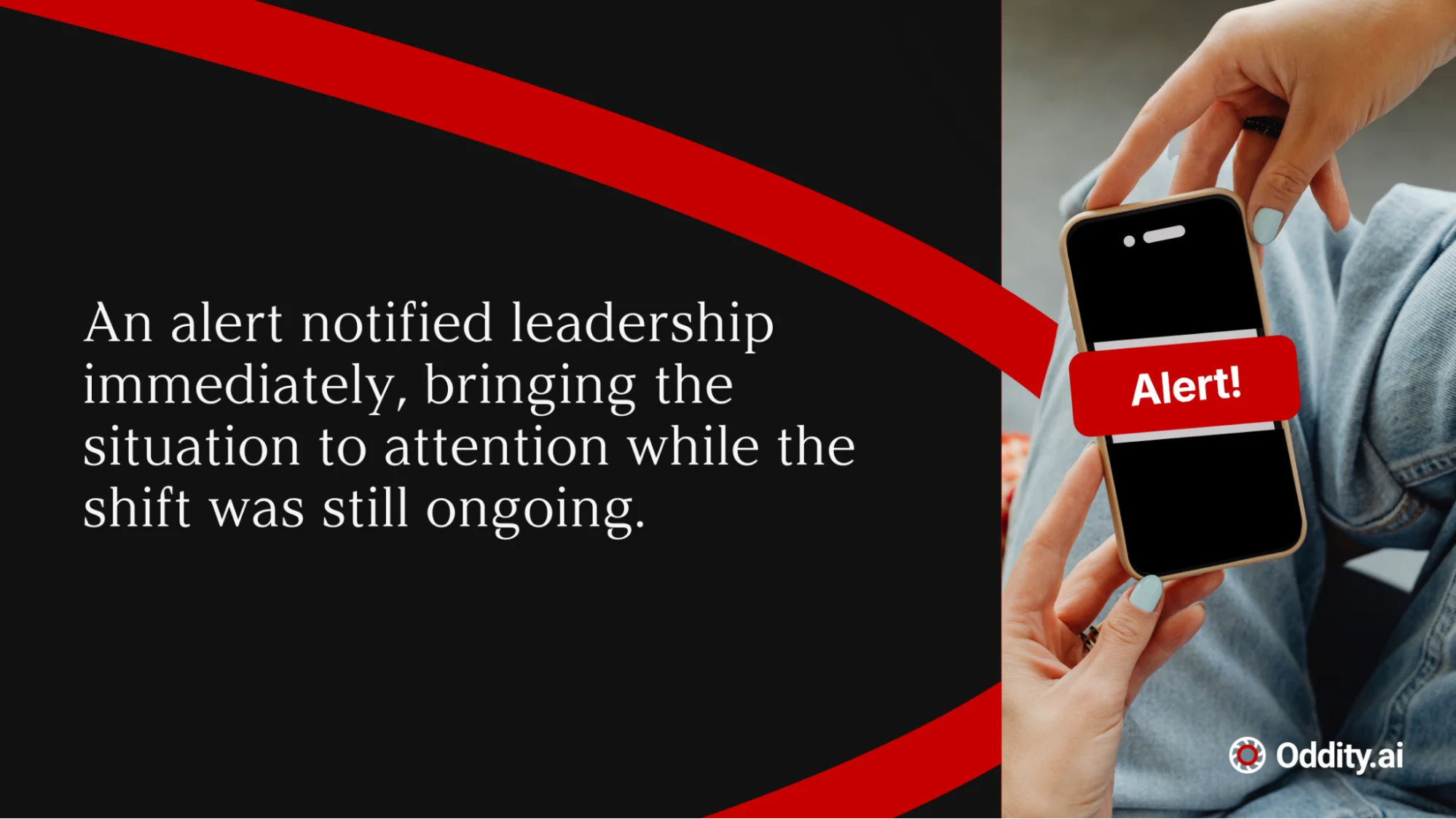
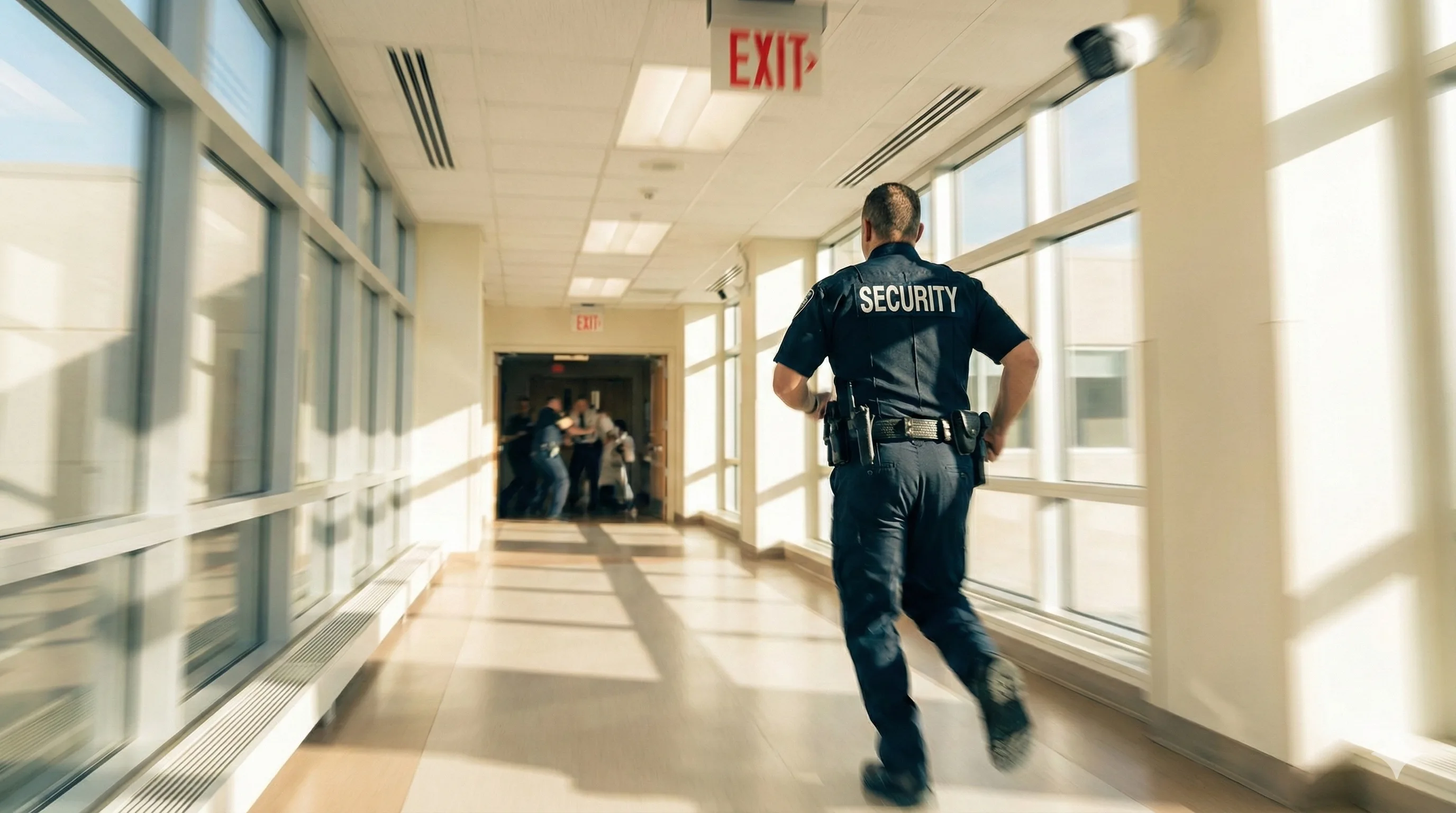
Shortly after go-live, the value of real-time awareness became tangible. An alert flagged a brief peer-to-peer interaction in a hallway, an interaction staff had missed in the moment.
Leadership was notified immediately. They contacted the program, reassigned coverage and ensured the remainder of the shift stayed safe and supported. The response was calm, timely and grounded in objective information rather than reconstruction after the fact.
Beyond individual moments, investigations began to change. Reviews became faster and more focused. External investigators actively requested footage and video was increasingly treated as a vital part of the investigative process. Families also received clearer and fact-based explanations when questions arose.
One of the most meaningful impacts was the ability to identify self-injurious behavior that occurred outside staff view. In several cases, this explained unexplained injuries that might otherwise have led to staff suspension.
Reducing unnecessary suspensions had a direct effect on staffing continuity, an issue leadership increasingly recognizes as a safety concern in its own right. Clearer evidence also reassured families that concerns were taken seriously and addressed with transparency.
As leadership summarized, “It keeps programs staffed and reassures families.”
Leadership at The NEEDS Center is clear-eyed about the technology. The system is not perfect and alerting can continue to improve. Detection related to restraints and certain forms of self-injurious behavior is still evolving.
What matters is the partnership. Oddity.ai is viewed not as a vendor but as a collaborator, open to feedback, transparent about limitations and responsive to clinical realities. That honesty strengthens trust and supports responsible use.
The team is mindful not to become complacent. Real-time awareness supports decision-making but does not replace professional judgment or vigilant care.
Human services organizations share common structural realities. Distributed environments, unpredictable behavior and limited visibility persist despite skilled staffing. Continuous supervision is neither realistic nor desirable.
In this context, AI serves as an awareness layer, not surveillance. Real-time insight consistently outperforms reactive review because it shortens the gap between what happens and when organizations can respond.
When designed with privacy, collaboration and clinical respect in mind, real-time awareness can strengthen safety, fairness and trust across the sector.
Oddity.ai operates within a secure and encrypted cloud environment. Video remains private, with access restricted to authorized personnel. The system focuses on behavioral patterns rather than identifying individuals.
Alerts are generated in real time, within fractions of a second, so staff can be informed while context is still relevant.
Yes. The NEEDS Center integrated Oddity.ai using existing cameras via RTSP and a secure VPN, without deploying new on-prem hardware.
Objective and timely video context helps clarify what occurred, reducing reliance on delayed recollection and helping avoid unnecessary suspensions during investigations.
Initial sensitivity is tuned collaboratively. Alert thresholds are adjusted over time to balance visibility with practicality, based on real-world feedback.
If you’re exploring how to move from cameras to real-time awareness in human services, let’s compare notes.
Get in touch