Blogs
May 26, 2026

Thomas Alflen
Oddity.ai
Real-time detection matters not only because it surfaces a critical moment quickly, but because it gives care teams and leadership a clearer place to begin once the moment has passed.
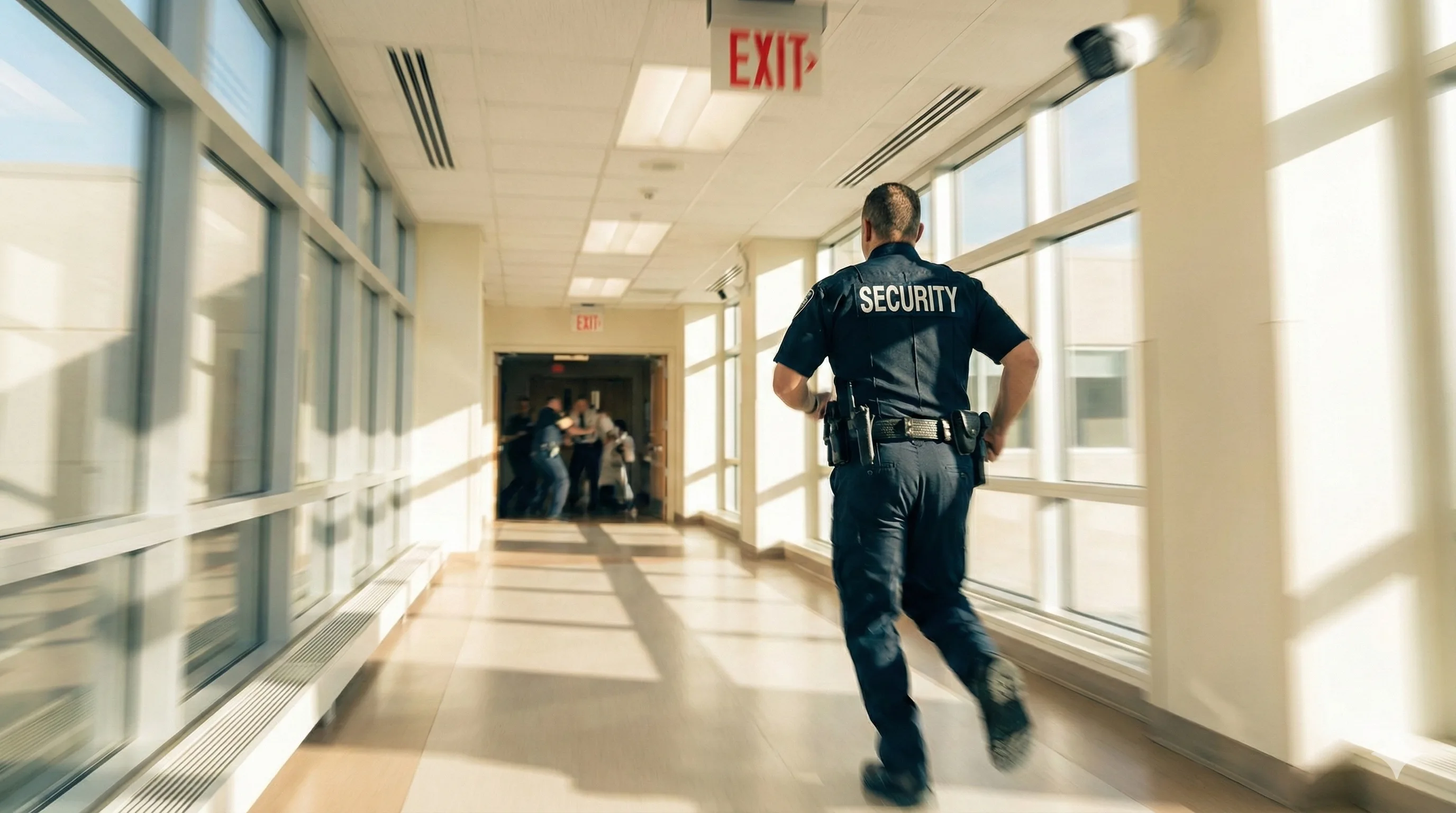
A supervisor gets the message after the shift has already moved on. Something happened earlier. Staff handled it as best as they could. The person involved is now calm. The room looks normal again. But the questions have started.
What exactly happened? When did it begin? Who saw the first signs of escalation? Was anyone hurt? Does leadership need to speak with a family member? Is there footage somewhere?
In many care environments, this is where the real pressure begins. Not always in the moment itself, but in the hours that follow. The situation is over, yet the organization is still trying to understand it.
One staff member remembers the verbal exchange. Another remembers the physical contact. Someone else only saw the end. A supervisor may hear about it later, when details are already blurred by the pace of the shift. Operations or IT may need to help locate video. Leadership may need to make decisions before the full picture is clear.
That gap between what happened and what the organization can confidently explain is where stress builds.
This is why real-time incident detection matters. Not only because it alerts teams quickly, but because it changes what happens next. It gives care organizations a clearer starting point after a critical moment, when people need facts, context, and calm decision-making.
Many care organizations already have cameras. But a camera does not automatically create clarity.
A camera records. It stores. It waits for someone to know where to look.
That is often the problem.
When a situation involving aggressive behavior, physical contact, or staff being physically attacked or abused is reported after the fact, teams may need to search through long blocks of footage. They may need to check different rooms, timestamps, and angles. Often, they are trying to match video to staff recollections that are incomplete through no fault of anyone involved.
Even a short delay can matter. In some cases, incidents may take several minutes to be noticed. In other cases, they may not be detected at all until someone reports a concern later.
By then, the organization is not only responding to the incident. It is responding to uncertainty.
That uncertainty affects everyone. Staff may feel exposed to assumptions. Supervisors may feel pressure to explain something they have not fully reviewed. Families may want answers. Leadership may need to make decisions about staffing, reporting, follow-up, or communication.
This is where AI safety technology in care becomes more than a detection tool. Used responsibly, it helps teams move from searching to understanding.
After a difficult moment, the follow-up process usually unfolds in three stages.
The organization is gathering pieces. A note from one staff member. A verbal update from another. A rough time estimate. A concern that the situation may have moved from verbal escalation to physical contact. The facts are scattered, even when everyone is trying to be accurate.
Someone has to find the relevant context. This is where time disappears. A supervisor or operations lead may spend hours moving through footage, trying to locate the exact point where the situation changed. If the time estimate is wrong, the search gets wider. If several cameras are involved, the work becomes slower.
Leadership still needs to act. They may need to speak with staff, update documentation, support the person who was affected, reassure a family, or decide whether additional training or staffing changes are needed.
When a review takes too long, every next step slows down with it.
This is why incident review automation is important in care environments. The purpose is not to remove people from the process. The purpose is to help people start from the right place.
The missing piece is not always footage. Many organizations already have footage.
What is missing is a fast path to the relevant moment.
Traditional camera systems can be useful after an incident, but they often function like an archive. The information may be there, yet the organization still needs to dig for it.
A supervisor should not have to spend half a shift searching for the beginning of an escalation. An IT lead should not have to become the person everyone depends on to locate basic context. Leadership should not have to make early decisions based only on partial memory when better information exists somewhere in the system.
Care teams need to know when something happened, where to look, and what sequence of events led to the outcome.
That is the operational value of care facility safety AI. It turns existing visibility into usable clarity.
With Oddity.ai, the process changes at the moment a concerning behavioral pattern is detected.
Oddity.ai is designed to detect more than 80 percent of relevant incidents involving aggressive behavior, physical contact, or situations where staff are physically attacked or abused. That alert gives teams a clearer starting point for response and review.
The difference is not only speed. It is context.
Instead of hearing about a situation later and asking, "Where should we start looking?", teams already have a surfaced moment. Instead of searching across hours of video, they can begin with the relevant section. Instead of relying only on memory, leadership can review what happened with stronger evidence.
The alert starts a better follow-up pathway:
This creates escalation visibility. It helps teams understand whether a situation moved from verbal distress to physical contact, whether staff were able to intervene, and what support may be needed next.
The value of real-time detection does not end when the alert appears. It continues through the review, the documentation, the family conversation, and the operational decisions that follow.
Imagine a shared living environment during an afternoon shift.
A person receiving services becomes upset after a change in routine. A staff member notices the frustration and begins verbal de-escalation. At first, the situation appears manageable. The person raises their voice. Another resident moves closer. Staff redirect them.
Then the tone changes. The person becomes more agitated, steps toward the staff member, and makes physical contact. Another employee comes over to help. The situation is contained, but one staff member has pain in their wrist and another is unsure exactly when the escalation began.
The shift continues because it has to. Meals still need to happen. Medication schedules continue. Other recipients of services still need support.
Later, the supervisor hears about it.
Without real-time detection, the organization may need to reconstruct everything manually. Who was present? What time did it happen? Which camera has the clearest view? Did the verbal escalation last seconds or minutes? Was there an injury? Was the intervention appropriate? What should be shared with leadership or family members?
With Oddity.ai, the relevant moment has already been surfaced through a real-time alert. Leadership can review the context sooner. They can see the progression from verbal escalation to physical contact to injury. They can speak with staff while details are still fresh. They can make follow-up decisions based on a clearer record.
The AI does not decide who was right or wrong. It does not replace supervision, documentation, or professional judgment.
It simply helps the organization get to the right moment faster.
The NEEDS Center shows why faster context matters after a critical moment.
The organization already had cameras across its programs, but those cameras were mainly useful after something had been reported. When unexplained injuries appeared, investigations had to start after the fact. In some cases, staff were suspended as a precaution while leadership and external investigators worked to understand what had happened. That protected the process, but it also created pressure on already tight staffing levels.
After implementing Oddity.ai, the camera system became more than a passive archive. In one early example, an alert flagged a brief peer-to-peer interaction in a hallway that staff had missed in the moment. Leadership was notified quickly, contacted the program, adjusted coverage, and helped keep the rest of the shift safe and supported.
The same value applied to investigations. Timely video context helped The NEEDS Center move faster from uncertainty to evidence. In several cases, self-injurious behavior outside staff view helped explain unexplained injuries that might otherwise have led to staff suspension. That meant fewer unnecessary disruptions, stronger staffing continuity, and clearer communication with families.
Oddity.ai did not replace professional judgment. It helped The NEEDS Center reach the right moment faster, so leaders could make decisions with clearer context, support staff more fairly, and reassure families with more confidence.
Clarity is often talked about as a leadership need. It is also a staff need.
When context is missing, staff can feel vulnerable. They may worry that a difficult interaction will be judged from an incomplete account. They may not remember every detail because the situation moved quickly. They may have done the right thing under pressure, but still feel uncertain about how it will be reviewed.
Faster context helps reduce that fear.
It gives supervisors a better way to understand the situation. It helps leadership separate assumption from evidence. It allows the organization to support staff, protect recipients of services, and communicate more responsibly.
This is one reason staff safety in care facilities is not only about faster response. It is also about fairer follow-up.
When a team can review the actual sequence of events sooner, the conversation changes. It becomes less about reconstructing memory and more about understanding what happened, what support is needed, and what can improve next time.
Post-incident clarity should never come at the cost of trust.
Care environments handle deeply sensitive moments. Video context can involve people during distress, staff under pressure, and recipients of services in vulnerable situations. Any technology used in this setting must treat that responsibility seriously.
Oddity.ai is designed as privacy-first AI for care environments. It operates through secure private cloud infrastructure with encrypted data handling, no third-party access, and HIPAA-compliant practices.
Organizations need faster clarity, but they also need confidence that sensitive context is handled responsibly. They need systems that support human judgment rather than override it. They need detection focused on safety-relevant behavior patterns, not broad or unnecessary surveillance.
The goal is not to watch people continuously. The goal is to surface safety-relevant moments so trained professionals can review and respond with context.
That is where human services safety technology has to earn trust: through careful design, responsible access, and practical value in real operational moments.
For leadership, the impact is practical.
Supervisors begin with the relevant moment instead of a rough guess. Staff are supported with clearer context. Families receive more confident explanations when appropriate. Follow-up becomes more consistent because the organization is not starting from confusion every time.
That does not remove the complexity of care work.
Difficult moments will still happen. People will still need skilled support. Staff will still rely on training, judgment, and teamwork.
But the aftermath can become clearer.
And in care environments, that clarity has real value. It protects time. It supports trust. It helps leaders act with more confidence. It gives teams a better way to understand critical moments after they happen.
The alert is only the beginning. What matters next is how quickly your team gets clarity.
Oddity.ai creates an alert when a relevant behavioral pattern is identified and surfaces the relevant moment for review. This gives staff, supervisors, and leadership a clearer starting point instead of forcing teams to search through long periods of video manually.
Real-time alerting helps teams know where to look. Instead of reviewing hours of footage across multiple feeds, they can focus on the moment connected to the alert. This can reduce search time and help follow-up begin sooner.
No. Oddity.ai does not decide responsibility, assign blame, or replace human judgment. It supports people by providing faster access to relevant context. Care teams and leadership remain responsible for review, response, and follow-up.
Clearer context helps organizations understand what happened more fairly. Staff are less dependent on memory alone, leadership can review the sequence of events sooner, and recipients of services can be supported with better-informed follow-up.
Oddity.ai uses secure private cloud infrastructure, encryption, no third-party access, and HIPAA-compliant practices. The goal is to provide operational clarity while handling sensitive care moments responsibly.
If your organization already records critical moments but still struggles to find and understand them quickly, it may be time to rethink what happens after the alert.
Talk to Oddity.ai about turning real-time detection into faster clarity, fairer follow-up, and stronger trust.
Talk to our team